
Practical car tutorial
Check Engine Light Turned Off: Is the Problem Really Gone?
If your check engine light disappeared, the problem may still be stored or intermittent. Learn what to check, what not to ignore, and when diagnosis still makes sense.
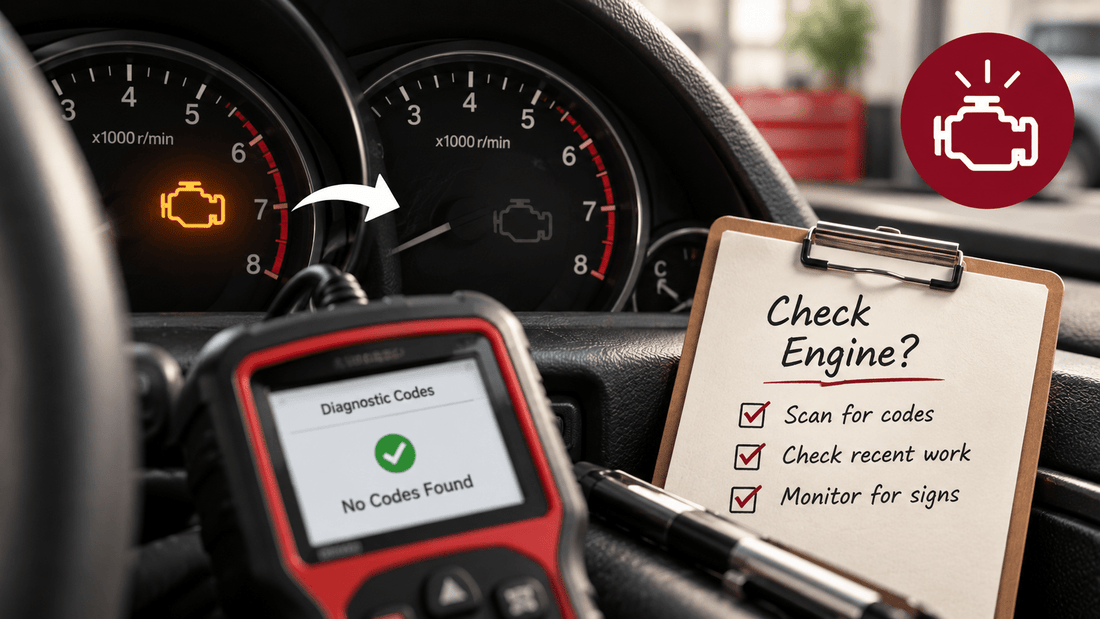
A check engine light that turns itself off can feel like good news. Sometimes the condition really was temporary. But the light disappearing does not automatically mean the underlying problem is gone.
Modern vehicles continuously monitor many systems. A warning light can come on when the computer detects a fault, then turn off later if that fault does not repeat for a certain amount of driving. Depending on the vehicle and the type of fault, diagnostic information can still remain stored even after the dashboard light disappears.
Why would a check engine light turn off by itself?
There are several possible reasons:
- The problem was intermittent. A sensor, connector, ignition component, emissions component, or other system may act up only under certain conditions.
- The triggering condition stopped happening. The computer may stop illuminating the light after enough drive cycles without detecting the same fault again.
- A temporary condition corrected itself. For example, an emissions-related issue can sometimes be triggered by a sealing problem that is no longer present.
- The fault is still present but has not met the conditions needed to turn the light back on yet.
That last point is why “the light went away” should not automatically become “the repair is no longer needed.”
Can a code still be stored after the light turns off?
Often, yes. Many vehicles can retain stored, pending, or historical diagnostic trouble codes even when the check engine light is no longer illuminated. The exact behavior varies by vehicle and fault type.
If you already have access to a compatible scan tool, checking for stored information can help you understand what the vehicle detected. A code is a starting point, not a complete diagnosis. It tells you which system or condition the computer noticed; it does not always identify the exact failed part.
What should you do if the light disappeared?
1. Think about what the car was doing when the light appeared
Write down any symptoms you noticed:
- rough running or shaking;
- loss of power;
- hard starting;
- unusual fuel use;
- strange noises or smells;
- hesitation during acceleration;
- recent refueling, maintenance, or repairs.
Even if the symptom has stopped, that information can make later diagnosis much easier.
2. Check for obvious, safe-to-inspect issues
Look for anything visibly loose or unusual under the hood only when the vehicle is safely parked and cool enough to inspect. On vehicles that use a conventional fuel cap, confirm it is properly tightened and inspect it for obvious damage. Many newer vehicles use capless systems, so this does not apply to every car.
Do not disconnect the battery just to “clear the light.” That can erase useful diagnostic information and may create additional electronic resets.
3. Pay attention to whether the light returns
If the light comes back, note the driving conditions: cold start, highway speed, stop-and-go traffic, acceleration, rain, extreme temperature, or immediately after refueling.
A repeating pattern is useful information.
4. Scan the vehicle if you can do so safely
A basic OBD-II scan can reveal stored information on many vehicles. But avoid the common mistake of replacing the part named in the code description without testing the system first.
For example, a code that mentions a sensor can sometimes be caused by wiring, a vacuum leak, a related component, or another condition affecting the sensor reading.
When should you take a check engine light seriously even if it goes away?
Arrange diagnosis sooner if the warning was accompanied by:
- engine misfiring or strong shaking;
- major loss of power;
- stalling;
- overheating;
- strong fuel or burning smells;
- poor braking or steering behavior;
- another red warning light.
A flashing check engine light is generally more urgent than a steady one and can indicate a condition that may damage the catalytic converter or affect drivability. Reduce load, follow your owner’s manual, and get appropriate professional help rather than continuing to drive normally.
What if the car feels completely normal now?
If the car drives normally and the light has stayed off, you may not need to panic. But it is still smart to keep a record of what happened and check for stored information before forgetting about it entirely.
This is especially useful before a repair visit because you can tell the mechanic when the warning appeared, how long it stayed on, whether it was steady or flashing, what symptoms you noticed, whether the light turned off on its own, and any code you read.
Go to the garage with better information
If the light returns or you decide to have the vehicle checked, go in with a short symptom history and a few clear questions. That makes the visit more useful than simply saying, “The light came on once.”

My DIYER Mechanic Visit Pack is designed for exactly this situation. It gives you a place to record symptoms, diagnostic information, estimates, questions, and repair details before you approve work.
You can also read 7 Questions to Ask a Mechanic Before Approving a Car Repair before your next appointment.
The simple rule
A warning light disappearing is information—not proof that the problem is fixed. Record what happened, watch for patterns, preserve diagnostic information when possible, and investigate recurring or serious symptoms instead of waiting for a small problem to become a larger one.
Turn information into action
Continue with the right level of DIYER
The DIYER Car Guide helps you understand essential jobs. DIYER PRO adds tracking for expenses, maintenance, repairs, fuel, documents, and planning.
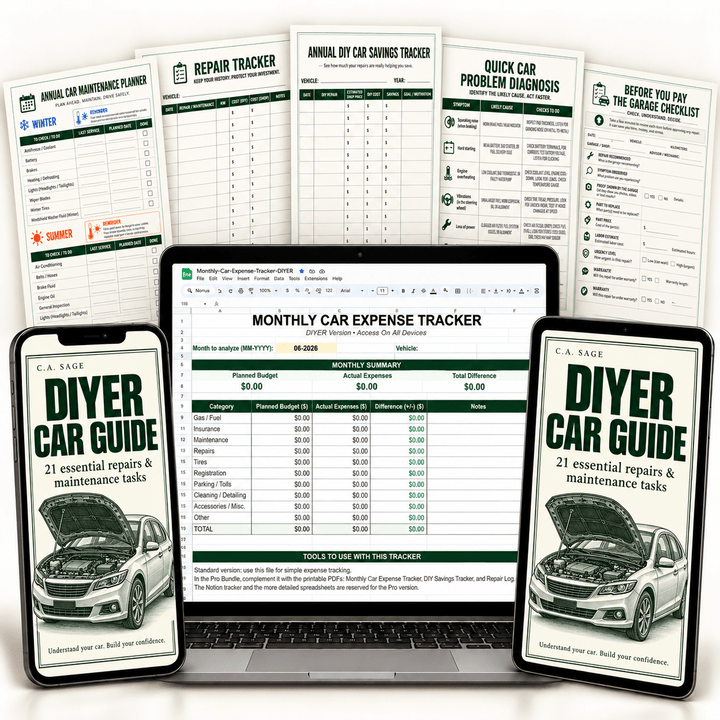
DIYER Car Guide
21 essential repairs and maintenance jobs explained so you know what to check before you begin.
$27.00 CAD
See the DIYER Guide
DIYER PRO
A complete system to track your car, expenses, maintenance, repairs, and upcoming ownership costs.
$67.00 CAD
See DIYER PROAlready own the DIYER Car Guide? Use the DIYER PRO upgrade instead of buying the guide again.