
Practical car tutorial
Used Car Inspection Checklist: What to Check Before You Buy
A practical used-car inspection checklist covering body condition, tires, fluids, warning lights, test-drive checks, records, VIN details, and a pre-purchase inspection.
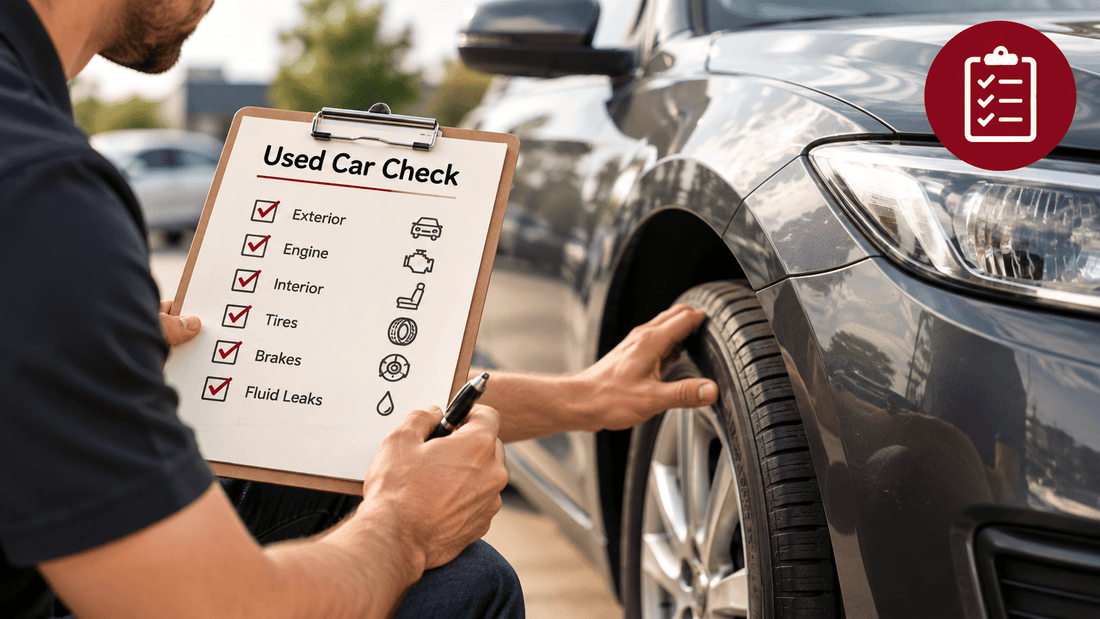
A used car can look clean in photos and still hide expensive problems. The goal of a used-car inspection is not to prove that a vehicle is perfect. It is to collect enough information to decide whether the price, condition, history, and expected repairs make sense together.
Use this checklist before you get emotionally attached to the car.
Before you arrive: research the exact vehicle
Before seeing the car, note the year, make, model, trim, engine, advertised mileage, asking price, VIN if available, known recalls or common issues worth researching, and the maintenance schedule for that model.
Bring a flashlight, tire-pressure gauge if you use one, paper or a digital checklist, and someone else if possible. A second person often notices things you miss.
1. Start with the body and paint
Walk around the car slowly and look for different paint shades between panels, uneven panel gaps, overspray on trim or rubber, dents, rust, bubbling paint, deep scratches, cracked lights or glass, and signs of poorly repaired collision damage.
None of these automatically mean “do not buy,” but they should lead to better questions about the vehicle’s history.
2. Check all four tires
Compare the tires for brand and model consistency, tread depth, uneven wear, sidewall cracking or bulges, age markings, and obvious damage or repairs.
Uneven wear can point to alignment, suspension, tire-pressure, or component problems. A vehicle that needs four tires soon should be priced differently from one with a good set.
3. Look underneath for leaks and damage
Without crawling under an unsafe vehicle, use a flashlight from the side to look for fresh fluid drips, heavy corrosion, damaged splash shields, exhaust damage, and obvious impact damage.
4. Inspect under the hood when the engine is cool
Look for very low fluid levels, heavy corrosion at the battery, cracked or damaged visible hoses, loose wiring or improvised repairs, oil or coolant residue, and strong burnt or fuel smells. Do not open a hot cooling system.
5. Ask to see the car cold
A cold start can reveal issues that are less obvious once an engine has already been warmed up. When possible, ask the seller not to start the car before you arrive.
6. Watch the dashboard during startup
Most warning lights illuminate briefly as part of a self-check, then turn off after the engine starts. Pay attention if a warning light never illuminates when expected, or if check engine, ABS, airbag, oil-pressure, charging, or brake warnings remain on.
7. Test every basic interior function
Check power windows and locks, heat and air conditioning, blower speeds, infotainment and charging ports, backup camera, seat adjustments, heated features if equipped, horn, wipers, washer system, and all exterior lights.
8. Look for signs of water intrusion
Check carpets, the spare-tire well, trunk corners, and headliner for musty odors, water stains, dampness, rust under mats, or suspiciously new carpeting.
9. Review maintenance and repair records
Good records help you understand what has already been done and what may be due next. Look for evidence of oil and fluid services, brakes, tires, battery, timing-belt service if applicable, major repairs, recall completion, and regular mileage progression.
10. Verify the VIN and ownership details
Make sure the VIN shown on the vehicle matches the paperwork and any history report you are using. Check your local rules for title status, liens, registration, inspection requirements, and transfer paperwork.
11. Take a proper test drive
Do more than circle the block. If safe and legal, include city speeds, moderate acceleration, steady cruising, several normal stops, turns in both directions, a rougher road surface, parking, and reversing.
Pay attention to steering pull or vibration, brake noise or pulsation, transmission hesitation or harsh shifting, engine hesitation, suspension clunks, wheel-bearing hum, and warning lights that appear only after driving.
12. Do not skip a pre-purchase inspection
A professional pre-purchase inspection is one of the best ways to reduce uncertainty, especially for a vehicle you are serious about buying.
A qualified shop can inspect areas you cannot realistically evaluate in a driveway, including the underside, brakes, suspension, leaks, structural concerns, scan data, and other model-specific issues.
Turn findings into a realistic ownership cost
Do not evaluate the asking price alone. Add the repairs and maintenance you expect shortly after purchase: tires, brakes, fluids, battery, inspection or registration costs, known repairs, and missing accessories or keys.
A cheaper car can become the more expensive choice if it immediately needs several major items.
Estimate what the car may cost after purchase
Once you identify upcoming work, compare it with the asking price and your repair budget. The tutorials How Much Does It Cost to Fix a Car? and How Much Should You Save for Car Repairs? can help you think beyond the purchase price.
Use a structured checklist instead of relying on memory
The Car Buying Kit — DIYER Auto is designed to help you compare used cars systematically instead of trying to remember everything during the inspection. It includes used-car checklists, inspection tools, cost-comparison worksheets, and evaluation pages.

The goal is not to find a used car with zero flaws. It is to know what you are buying, what it may need next, and whether the total cost still makes sense before you hand over the money.
Turn information into action
Continue with the right level of DIYER
The DIYER Car Guide helps you understand essential jobs. DIYER PRO adds tracking for expenses, maintenance, repairs, fuel, documents, and planning.
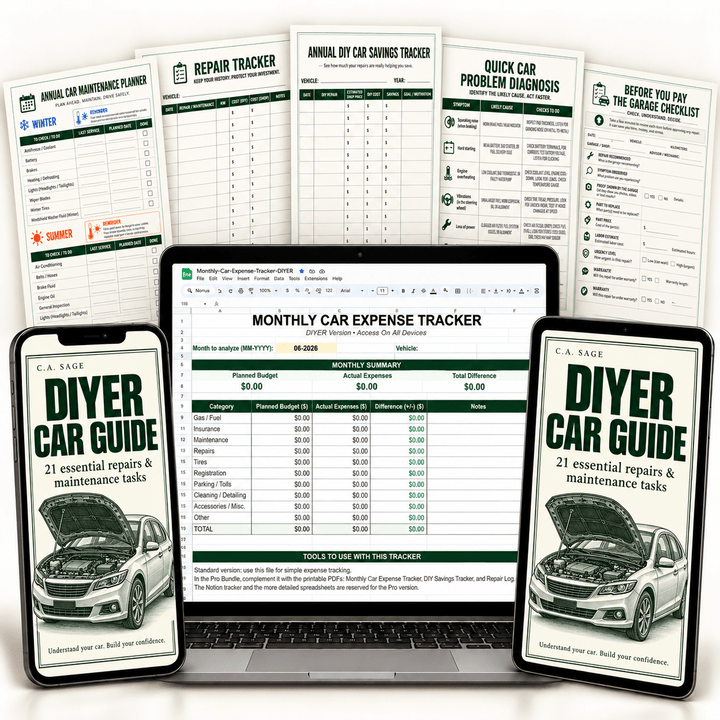
DIYER Car Guide
21 essential repairs and maintenance jobs explained so you know what to check before you begin.
$20.00 USD
See the DIYER Guide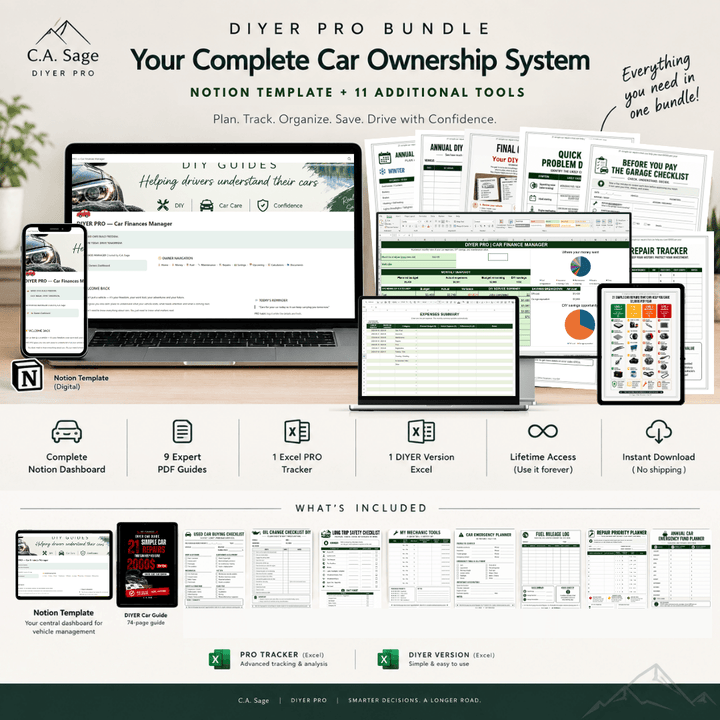
DIYER PRO
A complete system to track your car, expenses, maintenance, repairs, and upcoming ownership costs.
$48.00 USD
See DIYER PROAlready own the DIYER Car Guide? Use the DIYER PRO upgrade instead of buying the guide again.