
Practical car tutorial
5 Garage Scams to Watch For Before You Approve a Car Repair
Learn five common repair-shop red flags, what to ask before approving a car repair, and how to understand a repair estimate with more confidence.
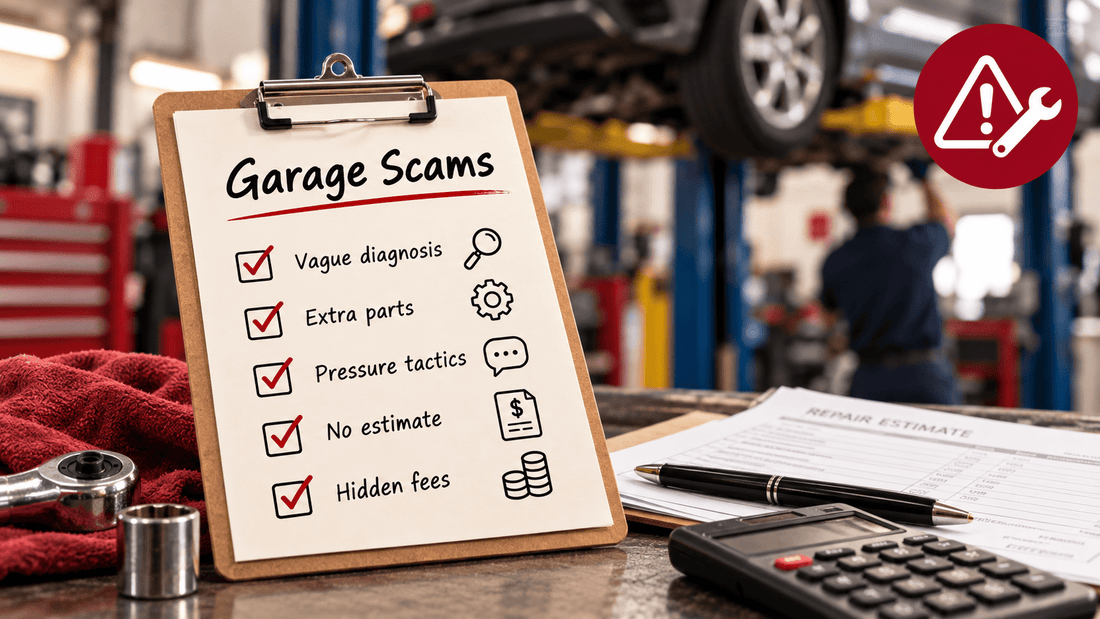
If a car repair estimate feels confusing, rushed, or hard to verify, you do not need to approve it on the spot. Most repair shops are legitimate, but there are still situations where vague explanations, unnecessary urgency, or unclear pricing can cost you more than expected.

5 garage scams and repair-shop red flags to watch for
1. A diagnosis that is too vague
If you are told that something is “bad” or “needs replacing” without an explanation, ask how the problem was confirmed. A good repair conversation should identify the failed part or system, the test that was performed, and the reason the repair is recommended.
Ask: What failed, how did you test it, and what evidence supports the recommendation?
2. Pressure to approve an “urgent” repair immediately
Some repairs really are urgent, especially when safety is involved. The red flag is urgency without a clear explanation. Ask what could happen if you drive the car today, for a few days, or until your next appointment.
Ask: Is this a safety issue, a risk of further damage, or routine maintenance?
3. Extra work you did not authorize
If a shop finds another problem after starting the job, you should know the additional cost before more work is performed. Ask to be contacted before any repair is added to the original estimate.
Ask: Will you contact me before the total changes?
4. Bundled services with no clear reason
Maintenance packages can be useful, but each service should have a reason. Ask whether the recommendation comes from the manufacturer maintenance schedule, a measured condition, or a symptom the technician found.
Ask: Why is this service needed now?
5. An estimate that cannot be itemized
A clear car repair estimate should help you understand parts, labor, diagnostics, shop supplies, taxes, and other fees. An itemized estimate also makes it easier to compare quotes fairly.
Ask: Can I see the parts, labor, diagnostic fee, and other charges separately?
7 questions to ask before approving a car repair
- Which part or system failed?
- How was the problem confirmed?
- Is the repair urgent, and why?
- Can I see an itemized estimate?
- What type of replacement part will be used?
- Are the part and labor covered by a warranty?
- Will you contact me before the price changes?

When should you get a second opinion?
A second opinion can be useful when the repair is expensive, the diagnosis is unclear, several major repairs are recommended at once, or the recommendation does not match the symptoms you are experiencing. Getting another opinion does not automatically mean the first shop is wrong; it simply gives you more information before making a larger decision.
Want to understand what is actually inside a repair estimate? Read How Much Does It Cost to Fix a Car?
Know more before you say yes
The DIYER Car Guide helps you understand 21 common repairs and maintenance jobs, what they involve, the tools required, and when a job may be realistic to do yourself.
Turn information into action
Continue with the right level of DIYER
The DIYER Car Guide helps you understand essential jobs. DIYER PRO adds tracking for expenses, maintenance, repairs, fuel, documents, and planning.
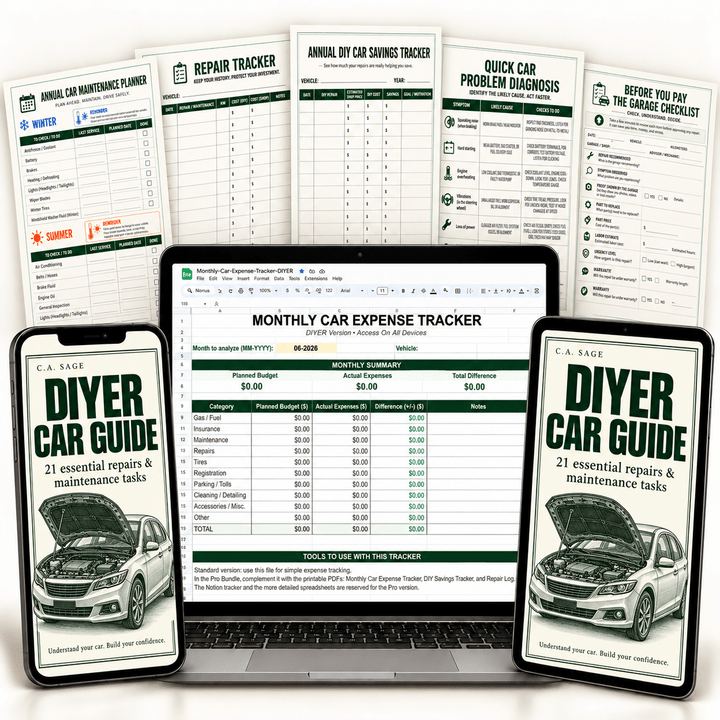
DIYER Car Guide
21 essential repairs and maintenance jobs explained so you know what to check before you begin.
$20.00 USD
See the DIYER Guide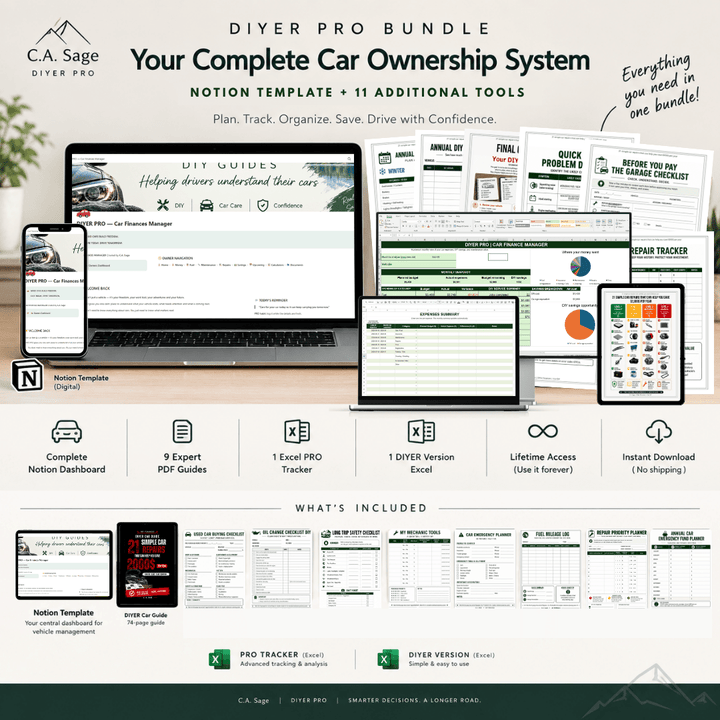
DIYER PRO
A complete system to track your car, expenses, maintenance, repairs, and upcoming ownership costs.
$49.00 USD
See DIYER PROAlready own the DIYER Car Guide? Use the DIYER PRO upgrade instead of buying the guide again.