
Practical car tutorial
Road Trip Car Checklist: 15 Things to Check Before a Long Drive
Use this practical road-trip car checklist to check tires, fluids, brakes, lights, battery, emergency supplies, documents, and more before a long drive.
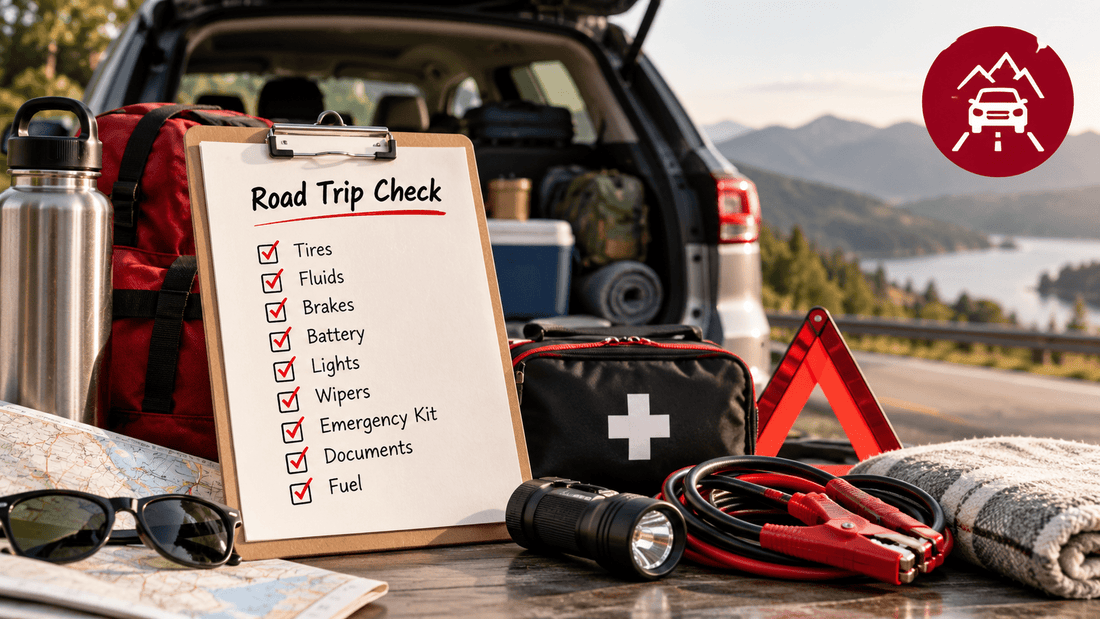
A long drive puts your car through hours of continuous use, higher temperatures, highway speeds, luggage weight, and sometimes unfamiliar roads. You cannot prevent every breakdown, but a 20–30 minute pre-trip check can catch many simple problems before departure.
Use this checklist a few days before your trip—not five minutes before you leave—so you have time to fix anything you find.
1. Check tire pressure when the tires are cold
Use the tire-pressure specification on the driver-door label or in the owner’s manual, not the maximum pressure molded into the tire sidewall. Check all four tires and the spare if your vehicle has one.
2. Inspect tire tread and condition
Look for uneven wear, cuts or cracking, bulges, objects embedded in the tread, and tread that is near the legal or manufacturer replacement limit.
3. Confirm you have a usable spare or repair system
Some vehicles have a spare tire, some have a sealant/inflator kit, and some rely on run-flat tires or roadside assistance. Know what your car actually has before you are stranded.
4. Check engine oil
Follow the owner’s manual procedure. Some vehicles use a dipstick; others use an electronic level display. If the oil is low, do not simply top it up indefinitely without understanding why the level dropped.
5. Check coolant—with the engine cold
Inspect the coolant reservoir according to your vehicle’s instructions. Never open a pressurized hot cooling system. Low coolant, visible leaks, overheating history, or a sweet smell should be investigated before a long drive.
6. Fill washer fluid and inspect the wipers
Good visibility matters more than people realize on a road trip. Replace badly streaking or damaged wiper blades and fill the washer reservoir with fluid appropriate for the expected temperature.
7. Test exterior lights
Check headlights, high beams, brake lights, turn signals, hazard lights, reverse lights, and license-plate lights where required.
8. Pay attention to brake symptoms
Before the trip, notice whether the brakes make new grinding or squealing noises, pull the car to one side, cause vibration, feel unusually soft, or trigger a warning light. If braking feels abnormal, investigate it before a long highway drive.
9. Look for fluid leaks
After the car has been parked, look underneath for fresh spots or puddles. Water from air-conditioning condensation can be normal, but engine oil, coolant, fuel, brake fluid, transmission fluid, or other leaks deserve attention.
10. Check the battery and starting behavior
If the engine has been cranking slowly, the battery is old, or you have recently needed a boost, get the battery and charging system checked before departure.
11. Listen for new noises on a short test drive
Take a short drive before the trip and listen for wheel-bearing hum, brake noise, suspension clunks, belt squeal, exhaust noise, or engine hesitation.
12. Check climate control and defrost
Heat, air conditioning, and windshield defrost are not just comfort features. They can affect visibility and safety in rain, humidity, cold, or extreme heat.
13. Pack basic emergency supplies
Your exact kit depends on your route, climate, and passengers, but common items include first-aid supplies, a flashlight, phone charging cable or power bank, water, a reflective warning device, weather-appropriate clothing or a blanket, and tools appropriate to your vehicle.
14. Confirm documents and roadside support
Make sure you have the documents required where you are driving, such as registration and proof of insurance. If you have roadside assistance, save the number in your phone before the trip and know what coverage you have.
15. Plan fuel or charging stops
For gasoline or diesel vehicles, consider fuel availability on remote routes. For EVs, confirm charging locations, connector compatibility, backup charging options, and expected range changes from temperature, speed, elevation, or cargo.
One final check before you leave
On departure day, do a quick walk-around: nothing leaking, no visibly low tire, all doors and cargo secured, mirrors and windows clean, no new warning lights, and adequate fuel or charge.
Prepare the car and the budget
If a long trip is coming up, it is also a good time to review your maintenance routine and your repair reserve. Use the monthly car maintenance checklist and the guide to building a realistic car repair fund.
Make road-trip preparation easier
I created the Emergency & Road Trip Kit — DIYER Auto so you do not have to rebuild this process every time you travel. It includes road-trip preparation tools, emergency checklists, vehicle and emergency records, a Car Emergency Planner, and the Annual Car Emergency Fund Planner.

Best road-trip strategy: prepare early enough that finding a problem is useful—not stressful.
Turn information into action
Continue with the right level of DIYER
The DIYER Car Guide helps you understand essential jobs. DIYER PRO adds tracking for expenses, maintenance, repairs, fuel, documents, and planning.
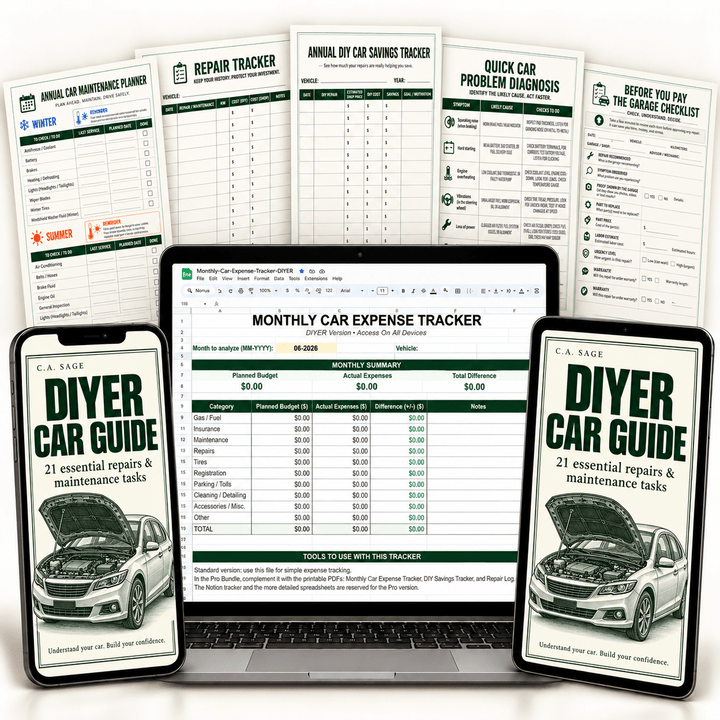
DIYER Car Guide
21 essential repairs and maintenance jobs explained so you know what to check before you begin.
$20.00 USD
See the DIYER Guide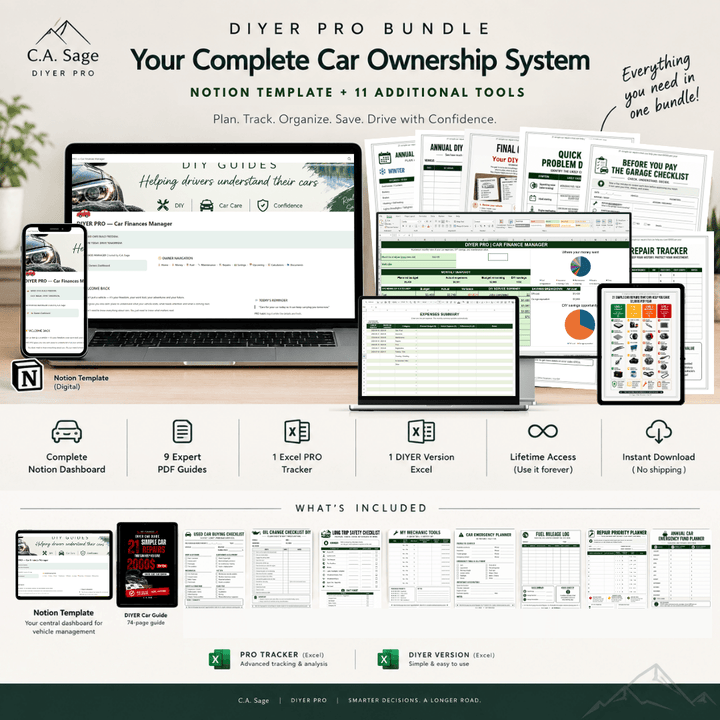
DIYER PRO
A complete system to track your car, expenses, maintenance, repairs, and upcoming ownership costs.
$48.00 USD
See DIYER PROAlready own the DIYER Car Guide? Use the DIYER PRO upgrade instead of buying the guide again.